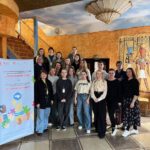
In March 2025, the Human Rights Foundation held a series of three training schools in Kyiv as part of the “Together We Can” programme, empowering civic trainers from across Ukraine.
Over 60 community leaders from six regions – Chernihiv, Cherkasy, Kirovohrad, Sumy, Chernivtsi, and Zaporizhzhia – joined the initiative, not seeking ready-made solutions, but tools for action.
These weren’t just trainings – they were honest conversations, moments of trust, reflection, and the birth of new ideas.
School on Conflict & Dialogue: Learning to Listen and Build Understanding (March 22–25, Kyiv)
The first school in the series – “Conflict Resolution and the Art of Dialogue” – focused on understanding conflict dynamics, behavioral patterns in crisis, and practicing facilitation, mediation, and negotiation.
This wasn’t about theory alone. Participants brought real cases from their communities into the room. Tension, fear, division – it was all present. But more importantly, participants left with clear approaches: how to find common ground, work through emotions, and transform conflict into dialogue.
Each team developed and presented a local initiative aimed at rebuilding trust. Many noted how practical and relevant the sessions were, reshaping their view of their roles as civic leaders.
Media Literacy & Podcasting: Fighting Disinformation, Creating Impactful Content (March 25–28, Kyiv)
The second school addressed media literacy, podcasting, and videoblogging. The goal wasn’t just to recognize misinformation – but to create powerful, people-centered media.
Participants explored cognitive biases, social media traps, disinformation tactics, and learned to use AI tools for ethical content creation. In parallel, they worked in teams on real podcast concepts, taking ideas all the way to pitching format and messaging.
Questions at the heart of the sessions were: How can independent media support communities during wartime? What kind of content truly informs – and connects?
For many, this school was a gateway into media activism – offering not only inspiration, but also hands-on skills to launch meaningful initiatives.
Strategic Communication in Wartime: Shaping Messages That Matter (March 28–31, Kyiv)
The third school explored public communication during war. Together, we examined how civil society can work with media, authorities, and stakeholders – especially in moments of crisis.
Participants crafted communication campaigns, wrote press releases, prepared interviews, and engaged in role-play with decision-makers. And most importantly, they tackled key questions: What is the role of CSOs in Ukraine’s recovery? How can NGOs move from observers to active partners?
Described as “timely and deeply necessary”, this training gave participants not just communication tools, but a vision for their strategic impact in shaping public discourse.
One Direction Forward: Growth, Collaboration, Action
These three schools weren’t just locations on a map – they became milestones in building a stronger civic movement.
Participants returned home with new skills, ideas, project teams – and a powerful drive to keep going. The “Together We Can” programme proved one thing clearly: Ukraine is full of leaders who know how to unite, listen, act, and drive change.
Each school opened a new growth point for local leaders.
And this is just the beginning. More trainings are coming – and with them, new ideas, new energy, and a shared commitment to Ukraine’s recovery and the growth of a resilient, vibrant civil society.
This project is implemented with the support of the IFA (zivik Programme) and funded by the Federal Foreign Office of Germany.