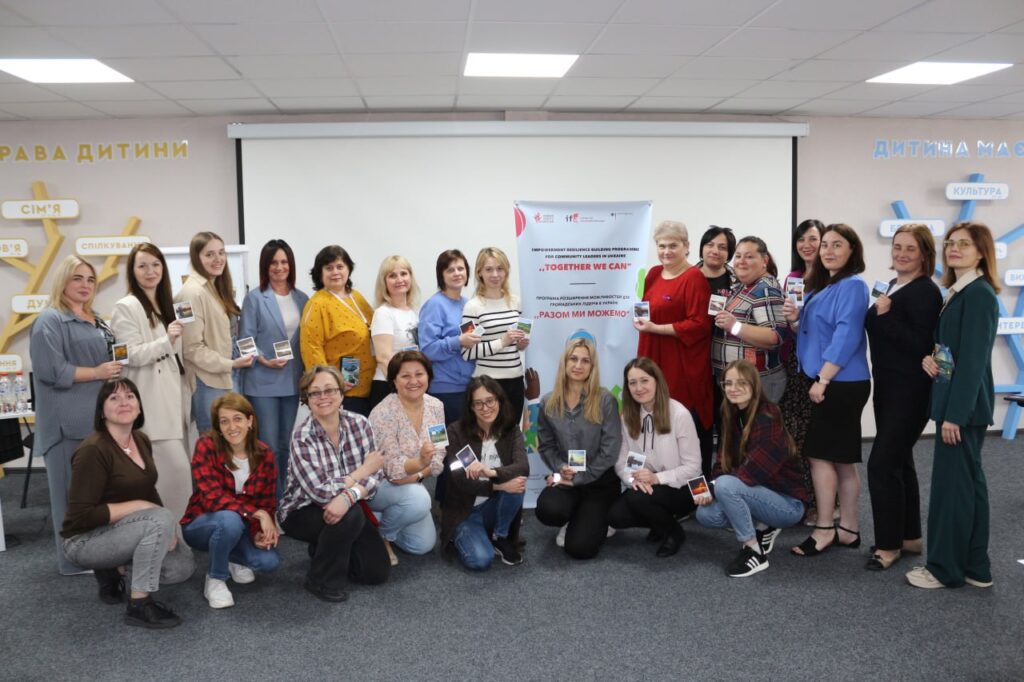
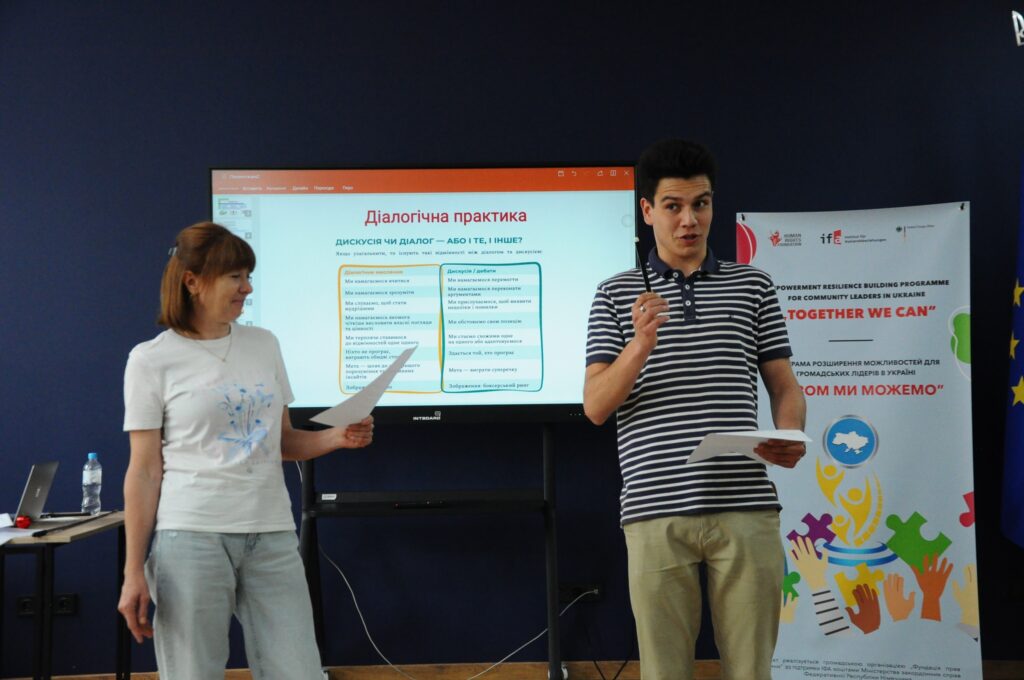
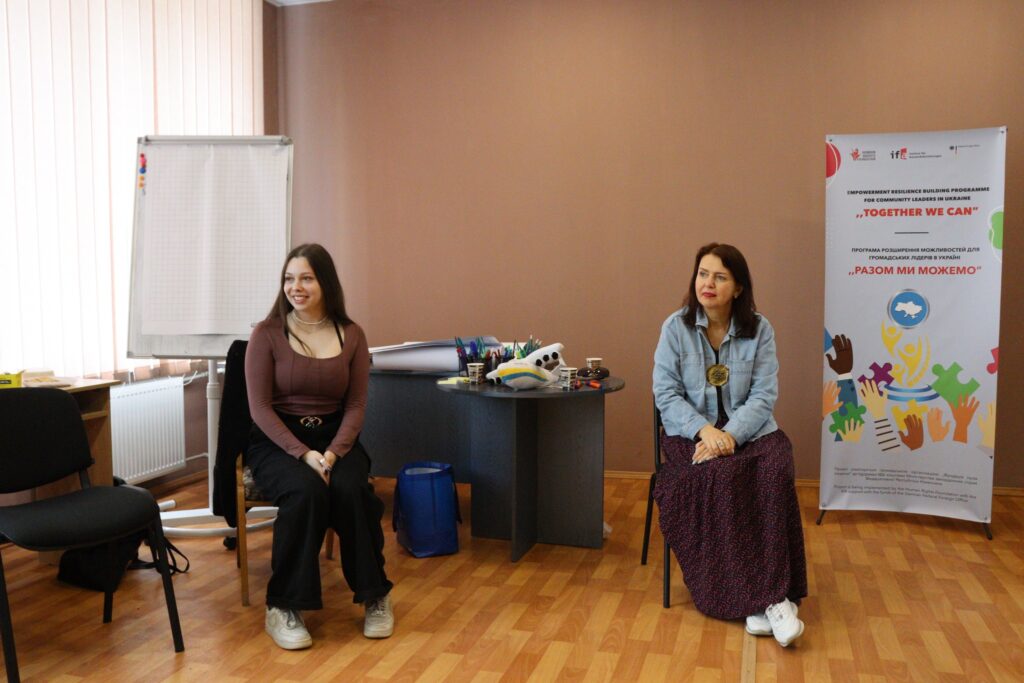
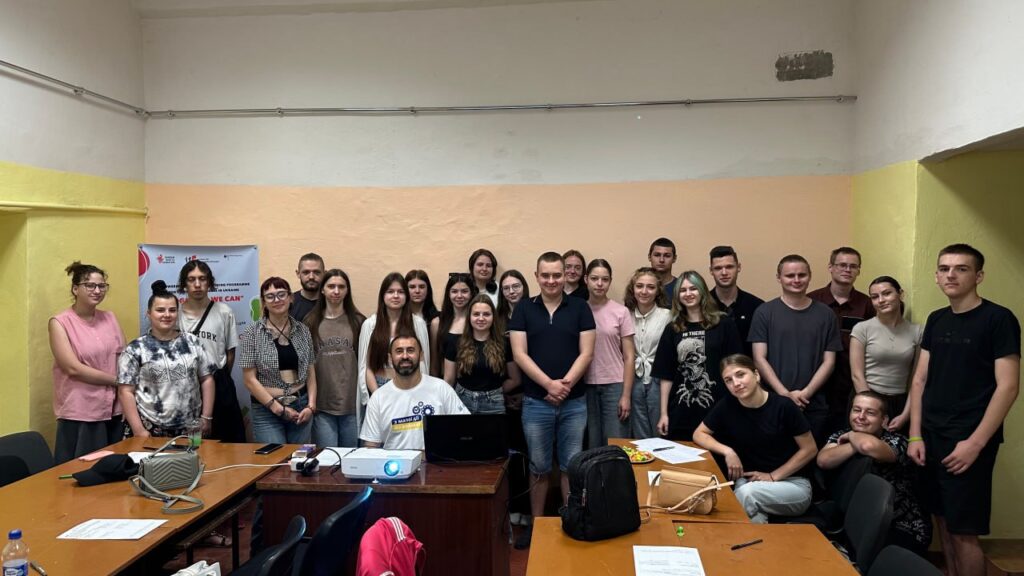
The “Together We Can” project, implemented by the Human Rights Foundation with the support of the IFA Zivik Programme and funded by the German Federal Foreign Office, successfully completed a series of trainings in six regions of Ukraine. These trainings on conflict resolution, emotional intelligence development, and dialogue creation have become an essential part of an initiative aimed at supporting local communities in the post-conflict period. 

Throughout the training sessions, participants had the opportunity to explore new methods of conflict resolution, utilize practical mediation techniques, and learn communication strategies to manage conflicts at the community level. 
 Sumy Region
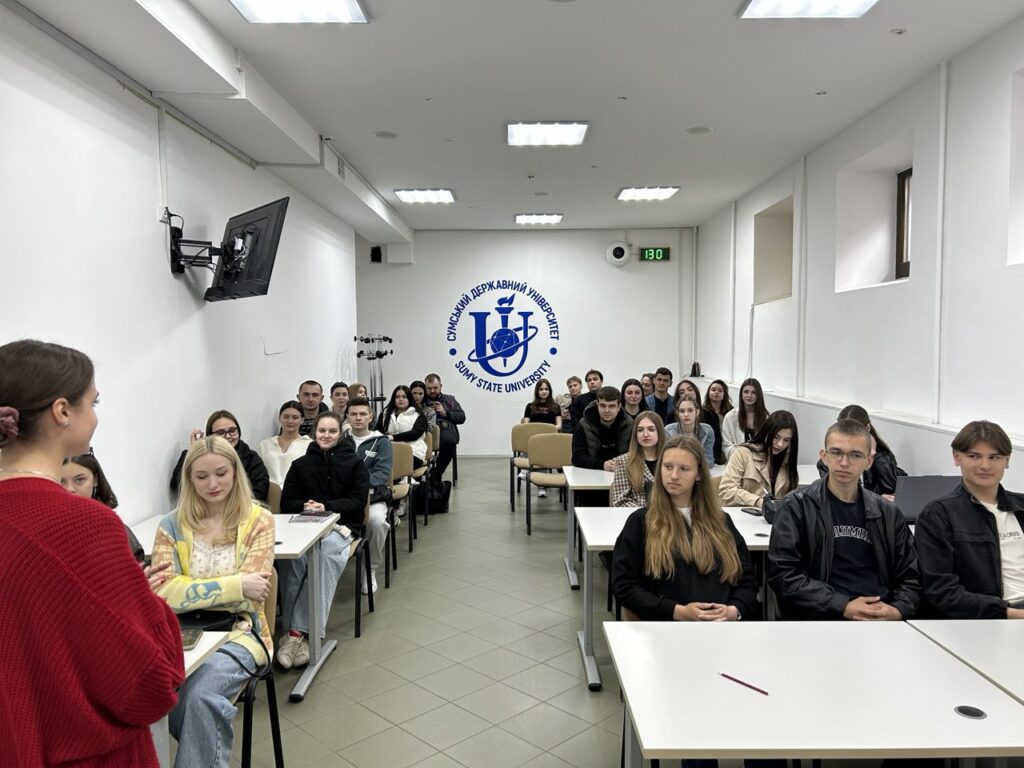
On May 21, a training session was held in Sumy, conducted by Anastasia Kruchan. Participants actively worked on group cohesion and discussed conflict resolution strategies through dialogue. Creative exercises helped participants better understand how to effectively resolve contradictions without violence, using constructive communication methods. 

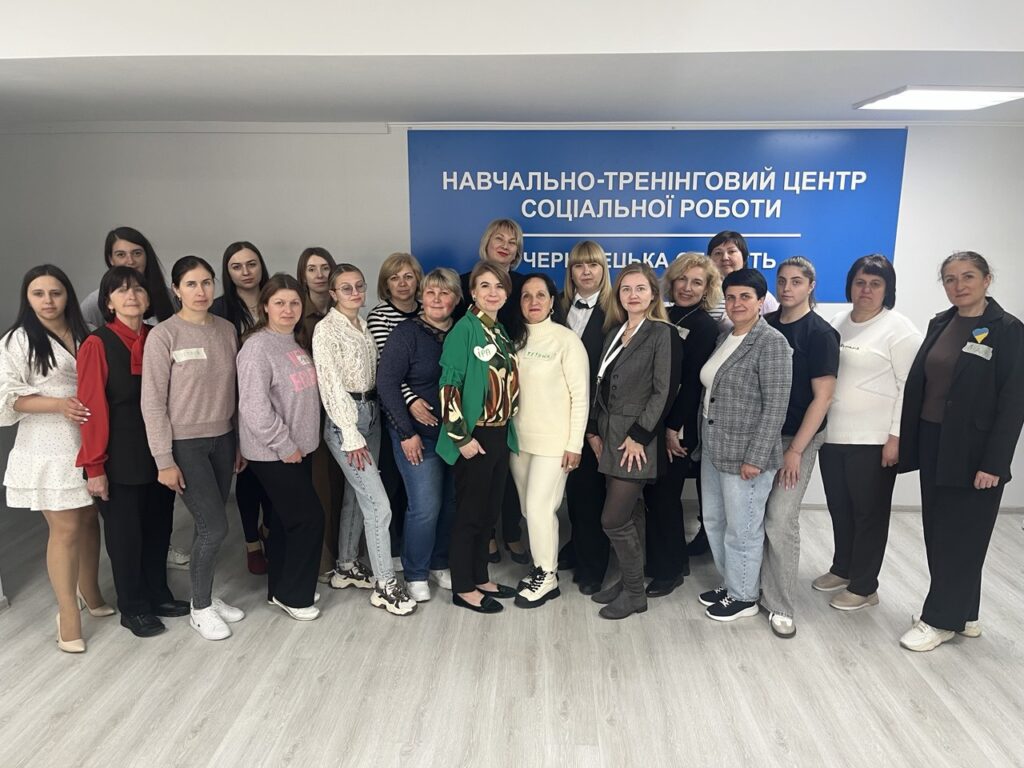
Chernihiv RegionOn May 14, the training in Chernihiv was held by Hanna Chepurna and Oksana Shuba. Participants worked on recognizing behavioral types in conflict situations and analyzed the importance of communication barriers in resolving conflicts. Additionally, participants gained practical skills in trauma-sensitive communication, which is crucial in post-traumatic stress conditions, particularly after crises. 
Cherkasy RegionOn June 10, the training in Cherkasy, led by Oleksandr Lysenko, focused on negotiation strategies as tools for peace in post-conflict settings. Participants worked on resolving conflicts between veterans and local residents using case studies and group exercises. Special attention was given to developing tools for effective interaction in communities that have experienced social upheaval. 
Zaporizhzhia RegionOn May 27, Tetiana Khitrova conducted a training session in Zaporizhzhia, where participants explored the importance of emotional intelligence for effective dialogue. Role-playing games allowed participants to understand the significance of emotional resilience during communication and conflicts. They worked on recognizing emotional reactions and managing them for better results in interactions. 
Kirovohrad RegionOn May 29 in Kropyvnytskyi, participants focused on developing leadership qualities that are essential for rebuilding trust within communities. Oksana Tkachenko introduced participants to negotiation techniques that not only help resolve conflicts but also restore social bonds. This training allowed community leaders to learn how to deal with various types of conflicts and develop skills that contribute to societal harmony. 
Chernivtsi RegionOn May 20, Lidiya Nesterenko led a mediation training session in Chernivtsi, an essential part of the work of local leaders. Mediation as a social service helps resolve conflicts at the community level, promoting mutual understanding. Participants learned when and how to offer mediation as a solution for resolving disputes within local communities. 

These trainings were a significant step in developing leadership qualities and effective dialogue skills among community activists and leaders in the regions. The “Together We Can” project contributes to strengthening community cohesion and rebuilding trust among people through practical mediation skills and tools. 
This project not only helped community leaders resolve conflicts at the local level but also created a foundation for sustainable development in communities after crises. Together with our partners, we are taking important steps toward peaceful coexistence.
#TogetherWeCan #Leadership #ConflictResolution #Mediation #Dialogue #CommunityDevelopment #Ukraine #HumanRights #SocialChange #PeaceBuilding